We rely on our lungs to obtain oxygen. Chronic lung diseases, including asthma, COPD, and cystic fibrosis (CF), are life-threatening health conditions that make it hard to breathe. A key cause of this difficulty is airway mucus plugging. Genetic mutations and environmental insults impair innate airway host defense, causing infection and inflammation. This leads to abnormal mucus production, airway remodeling, and mucus plugging.
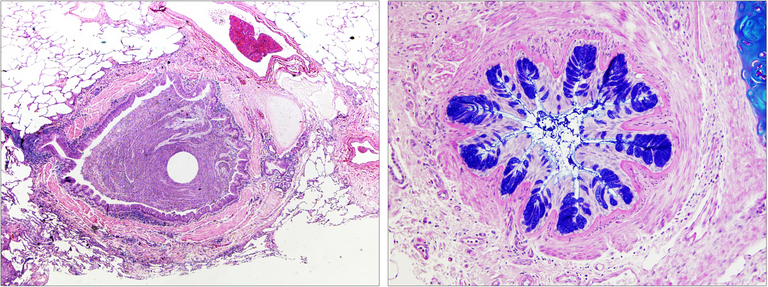
Understanding the cell biology, molecular biology, and pathophysiology of mucus production is crucial for developing targeted therapies. In humans, mucus is mainly formed by gel-forming mucins. Goblet cells on the airway surface produce MUC5AC and submucosal glands (SMGs) produce MUC5B. In fact, SMGs produce most of the mucus in healthy large airways. In diseased lungs, these glands become enlarged and produce abnormally sticky mucus. However, the field has mainly focused on surface goblet cells for a long time. Current histopathological tests, treatment strategies, and clinical outcomes largely target goblet cells. Because the SMG microenvironment is very different, treating mucus overproduction driven by SMGs remains a critical unmet need.
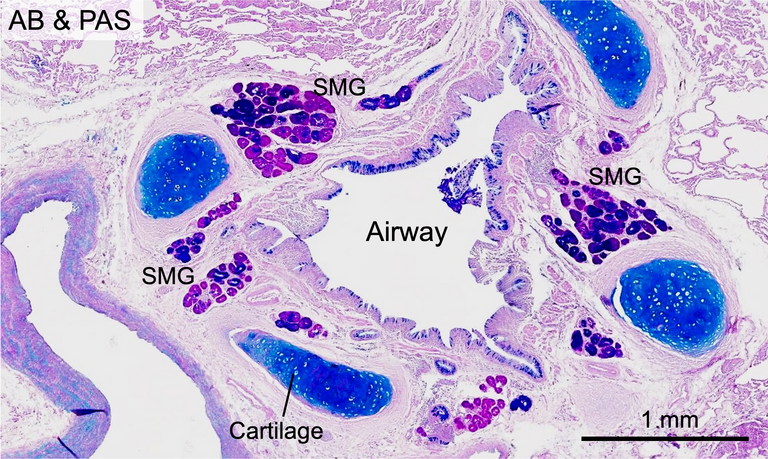
The main reason SMG pathology is poorly understood is the lack of good disease models. First, accessing human SMGs in patients, especially in early disease stages, is highly challenging. Second, mice, the most common laboratory animals, lack SMGs in their lower airways. Genetic mouse models of CF and primary ciliary dyskinesia (PCD) often fail to recapitulate the characteristic mucus phenotype and SMG pathology seen in patients.

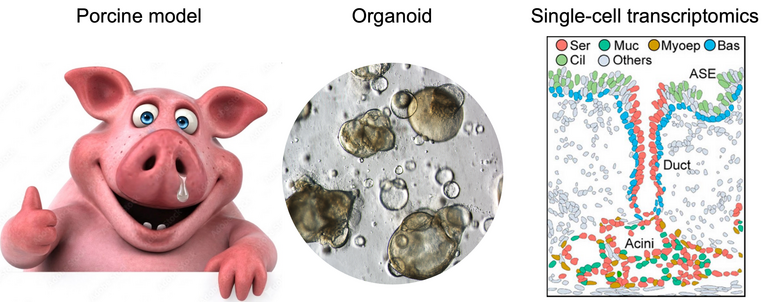
To address this problem, we focus on studies of pig models. Unlike mice, pig lungs are very similar to human lungs in anatomy and physiology, and they have abundant SMGs. Pig models of CF and PCD develop airway inflammation and mucus plugging just like human patients. Utilizing histology and immunohistochemistry, fluorescence in situ hybridization, single-cell and spatial transcriptomics, organoid and explant culture, and ex vivo and in vivo live imaging, we investigate specific inflammatory signals and cellular changes that cause SMG remodeling and mucus overproduction. Our goal is to discover underlying disease mechanisms and identify new SMG-focused therapeutic targets for chronic lung diseases.